

How to book your first gig as an independent artist
I booked my first gig at a small Ottawa room by sending one honest email. Here is the step-by-step version I wish I had, for independent artists.
By Julien Leclair, CEO, Fast Track
Published November 21, 2026 · 6 min read
In this article
- What do you need before you contact a venue?
- Which venues should you try first?
- How do you contact a venue?
- How far ahead should you reach out?
- What if they don't reply?
- What do you agree on once you get a yes?
- What I would do differently
- Find your first venue on Fast Track
- FAQ
- Do I need a following to book my first gig?
- Do I need an EPK?
- Will I get paid for my first gig?
- Should I email or DM a venue?
- How long should my first set be?
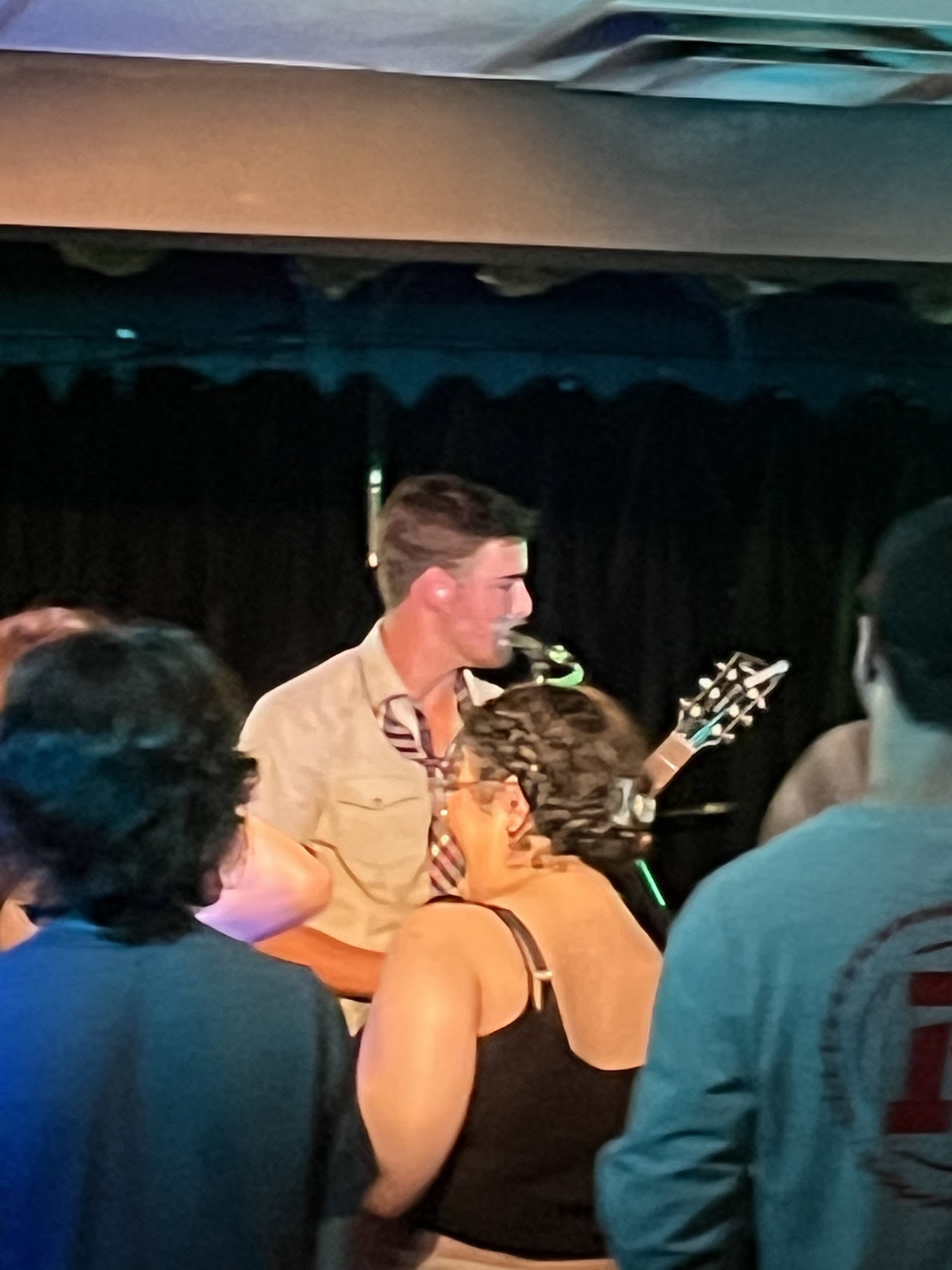
One of my first gigs was at LIVE! on Elgin, a small second-floor room at 220 Elgin Street in downtown Ottawa. I was playing with my old band, and we had no manager, no agent and no following. All we had were a few songs out and a cold email to Jon, who runs the place.
I still remember hitting send, and anxiously waiting his reply.
Since then, I have released music on my own, and now I spend my days building Fast Track, a platform that helps artists find venues and apply to them. I have been the nervous person typing the email. I have watched plenty of those emails get read, or not, while I worked my way into the local scene. The following article is what I wish someone had told me when I was starting out.
What do you need before you contact a venue?
Less than you think, but it has to be quick and easy. Have these three things ready before you send a message:
Something to listen to. Two or three songs on Spotify, Bandcamp or SoundCloud, or a short live video. A phone video in a decent room beats a polished track nobody can find. My mistake: I sent Jon a Linktree of our socials and streaming pages. Don't do that. Send the music itself, so nobody has to dig for it.
A short bio. Three or four sentences: who you are, what you sound like, where you are from.
One good photo. Well lit, with your face visible. Make it personal. People like to know who their talking to.
You can keep all of this in one place with an electronic press kit (EPK): your music, bio and photo on a single page with one link. I wish I had had one when I emailed Jon. You can build yours on Fast Track for free in a few minutes.
Which venues should you try first?
Start small, and build your experience. Look for small rooms that already book acts like you. A 90-seat room with live music multiple times every week needs new faces far more than a 1,000-capacity theatre does.
Here is why I picked LIVE! on Elgin. It was small, it was music-focused, and its calendar mixed a variety of touring acts, local artists, and open mic nights, so a newcomer like me didn't look out of place on the bill. Plus, it was already a name in the Ottawa scene. You can see the same details for any room on its Fast Track venue page, including genres, size and how it takes applications.
Good first targets:
Open mic and showcase nights. They exist to put new people on stage. LIVE! on Elgin, for example, runs an open mic every Tuesday.
Bars and cafés with a small stage.
Bills with several acts. A venue will take a chance on a new name when other acts share the night.
Before you write, look at who the venue booked recently. Do they play your genre? Are they at your level? If every act has fifty thousand monthly listeners and you have two hundred, aim one rung lower. You can filter venues by city and genre in the Fast Track venue directory.
How do you contact a venue?
The way the venue asks to be contacted. Many list a booking email or a submission form. Use it, because anything else tends to get ignored. If there is nothing, a short email to the general address works better than a DM.
I wrote to Jon directly. My message was short but complete, and I have since learned that his inbox is constantly full of emails missing basic details like who the sender is.
Here is the structure I would use today:
A subject line that says what it is. "Booking inquiry: [Your name], [genre], from [city]".
Two sentences about you. Who you are and what you play.
One honest reason you picked this venue. "I saw you hosted [artist] last month and I think our crowds overlap."
Links. Your music, one video, your EPK. No attachments.
A concrete ask. "I'm free any Thursday in March. Would one of those work for a 30-minute set?"
Never paste the same message into fifty inboxes. Venues can tell, and one real detail takes thirty seconds to add.
How far ahead should you reach out?
About four months before the date you want. I reached out 4 months ahead of my first show, and I still think that is a good rule for a room that books regularly. Busy venues fill their calendars early, and booking early also gives you time to promote the night. Open mics are the exception. They are often first come, first served, so a week or two ahead is fine.
What if they don't reply?
Most first emails get no answer. Don't take it personally. It is not a no, it is a busy person.
Wait about a week, then send one short follow-up that repeats your date range and your link.
If there is still nothing, try once through a different channel, like the venue's form or a DM, or stop by on a quiet afternoon.
After that, move on. Try again when you have something new: a release, a video, a recent show.
What do you agree on once you get a yes?
Put the details in writing so nobody is surprised on the night:
The date, load-in time, your set time and how long you play
How you are paid: guarantee, door split or tips
What the venue provides and what you bring
How each of you will promote the show
Then promote it properly. Venues rebook the acts who bring people through the door. I remember I reached out to as many friends as I could to fill the room and build a good first impression.
What I would do differently
If I had to start over, I would try my very best to not take denials or unresponsive venues personally. Things happen, and people are busy. Today, with Fast Track, I'd cast a wide net, writing personalized applications to venues that fit my style, and see who answers back.
Find your first venue on Fast Track
If you are starting from zero, start where I did: a small room that fits your sound. On Fast Track you can browse venues by city and genre, see how each one wants to be contacted, and apply with your EPK in one step.
FAQ
Do I need a following to book my first gig?
No. Open mics, bar nights and multi-act bills are built for new artists. Keep things simple. A clear pitch and a good video count for more than a follower count.
Do I need an EPK?
Not a fancy one. But having your music, bio, photo and links behind a single link makes it much easier for a venue to say yes.
Will I get paid for my first gig?
Often only a little, and sometimes just tips or a share of the door. Ask before you agree so it is not a surprise.
Should I email or DM a venue?
Follow what the venue says. Email or a submission form first, and a DM only when there is no other channel.
How long should my first set be?
Thirty minutes is typical. Ask the venue what they want, and leave them wanting more.
How far ahead should I book?
About four months for a venue that books regularly. For open mics, a week or two is usually fine.
About the author
CEO, Fast Track
Julien Leclair is the CEO of Fast Track. He releases music as a solo artist, used to play in the Ottawa band Sparrow's Valley, and booked his first show at LIVE! on Elgin. [TODO Julien: tidy this up and add links: Spotify, Instagram, website.]
Find venues that book your sound
Fast Track lists thousands of venues with who to contact for bookings. Create a free profile and start applying.